

Social emotional learning books can give your child a gentle way to understand big emotions, build confidence, and develop important emotional skills. Imagine your little one is curled in a ball on the lounge floor, overwhelmed by a frustration they can't quite name, while you stand there feeling just as helpless. It's a scene many Australian parents know well. You want to help them find their way back to calm, but the right words often feel out of reach. When you're searching for social emotional learning books, the sheer volume of generic titles can feel like just another chore on an already long to-do list.
We understand that you don't have hours to spend researching complex educational theories between school runs and dinner time. You simply want practical tools that work for your family. This article will help you discover how the right stories can help your child navigate big feelings and build lasting emotional intelligence. We'll explore how curated books and creative printables can turn daily challenges into moments of connection, helping you foster a calmer home environment and a more confident, empathetic child.
Key Takeaways
- Learn why stories provide a gentle, safe space for children to experiment with big emotions and develop vital self-awareness.
- Discover how to choose the best social emotional learning books by matching stories to your child's specific emotional journey.
- Master a simple five-step reading routine that turns a quiet story time into a meaningful conversation about empathy and resilience.
- See how creative worksheets and printables can help your child's name their feelings and strengthen their emotional intelligence.
- Understand the value of curating a family wellness library that combines physical books with the immediate support of digital e-books.
What Are Social Emotional Learning Books?
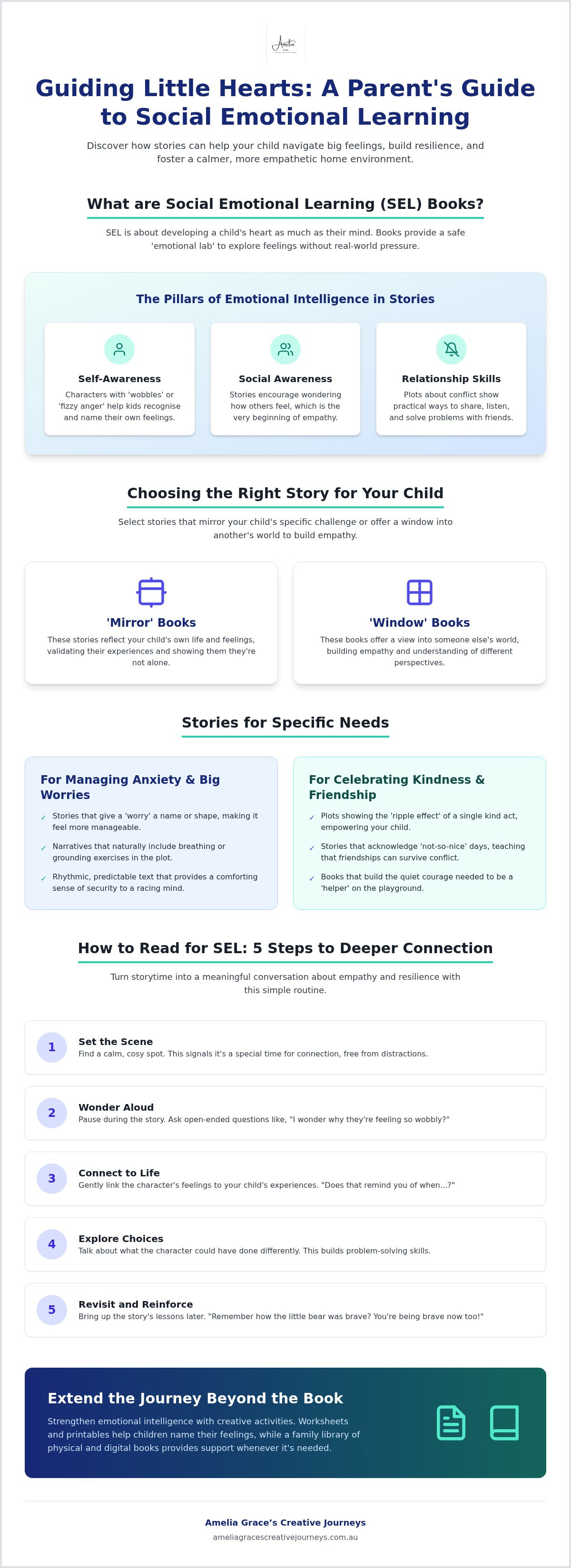
Social emotional learning books give children a gentle way to understand emotions, develop self-awareness, and build important social skills. At its core, social emotional learning is the process of building self-awareness, self-control, empathy, and the interpersonal skills children need to thrive. While these concepts might sound academic, they come to life beautifully within the pages of a story
Think of a well-chosen book as a safe 'emotional lab'. Inside this lab, your child can experiment with big emotions from a distance. They can watch a character navigate a stormy day or a friendship tiff without the immediate pressure of real-world consequences. This creates a powerful shift in your home. You move from simply 'learning to read' to 'reading to learn' about the complexities of the human heart. It's a creative journey where you, the carer, act as a supportive co-explorer rather than a lecturer.
The five pillars of emotional intelligence in stories
Books provide a unique window into the pillars of emotional intelligence. They allow children to practice these skills in a low-stakes environment before they need them on the playground.
- Self-awareness: By recognizing feelings like 'the wobbles' or 'fizzy anger' in a character, kids learn to identify those same sensations in themselves.
- Social awareness: Stories encourage children to look at the illustrations and wonder how others might feel, which is the very beginning of empathy.
- Relationship skills: Plotlines often canter on navigating conflict, showing children practical ways to share, listen, and solve problems with friends.
Why Australian families are prioritizing SEL
Many Australian parents are noticing that academic success is only one part of the puzzle. There is a growing focus on nurturing resilience, especially as children face the transition to 'big school' or Kindy. These milestones can be daunting, and having the right vocabulary makes a world of difference. Families are also leaning into the idea of a 'growth mindset'. By using social emotional learning books, we can teach our children that their abilities aren't fixed. They learn that challenges are just opportunities to grow, helping them bounce back from setbacks with more confidence and less anxiety.
How to Choose the Right Social Emotional Learning Books for Your Child
Every child walks a unique path, which is why choosing the right social emotional learning books matters. One week they might be grappling with a fear of the dark; the next, they're struggling to share their favourite blocks. Identifying this 'emotional gap' is the first step in selecting the most effective story for their current needs.
We often talk about 'mirror' and 'window' books. A mirror book reflects your child's own life and feelings, validating their experiences. A window book offers a view into someone else's world, which is essential for building empathy and understanding different perspectives. This balance is a key part of developing resilience through SEL. It helps children realize that while we are all different, our feelings are a shared human experience.
Don't overlook the impact of the artwork itself. Beautiful, thoughtfully created illustrations do more than just tell a story. Soft color's and gentle, flowing lines can actually help calm a child's nervous system. This creates a peaceful environment where they feel safe enough to explore complex topics without feeling overwhelmed.
Books for managing anxiety and big worries
For a child, anxiety can feel like an invisible, heavy weight. The most helpful stories for big worries are those that externalize the feeling. By giving a 'worry' a name, a shape, or even a funny personality, it becomes something tangible that a child can manage. Look for narratives that naturally weave breathing techniques or grounding exercises into the plot. Rhythmic, predictable storytelling also works wonders. The steady pace provides a comforting sense of security that helps quieten a racing mind.
Books that celebrate kindness and friendship
Friendship is a beautiful skill that requires practice and patience. Stories that demonstrate the 'ripple effect' of a single kind act show children the power they have to influence their world. It's equally important to find books that acknowledge 'not-so-nice' days. These stories teach empathy by showing that everyone has grumpy moments and that friendships can survive them. They build the quiet courage needed to be a 'helper' in the playground. If you're looking for stories that inspire these heart-center connections, you might enjoy browsing our wellness and lifestyle collection for your next family Favorite.
How to Read Social Emotional Learning Books for Deeper Connection
Opening a book is just the beginning. To truly get the most out of social emotional learning books, we need to move beyond the text and into the heart of the story. It's about creating a ritual that signals safety and invites curiosity. You don't need to be a teacher or a psychologist to do this well. You just need to be present and willing to explore alongside your little one.
- Prepare the space: Start by making the reading area a technology-free zone. Put your phone in another room and turn off the tell. This small act signals to your child that this is a safe, protected time for just the two of you.
- The "Picture Walk": Before you read a single word, look at the cover and the first few pages together. Ask your child what they think is happening based on the colors or the characters' faces. Predicting feelings is a vital first step in building social awareness.
- Pause and Ponder: When the story reaches a difficult moment, stop for a second. Use "I wonder" statements like, "I wonder what is going on in their tummy right now?" to encourage your child to step into the character's shoes.
- Connect to real life: Gently bridge the gap between the fiction and your own home. You might say, "This reminds me of when you were brave at the dentist last Tuesday." It helps them see that these big feelings happen to everyone.
- End with a "Heart Check": Close the book and finish with a simple ritual. It could be a high-five, a snuggle, or a quick question about how their own heart is feeling. This provides a sense of closure and security.
Conversation starters for curious minds
The goal is to keep the dialogue flowing naturally. Try to avoid "Yes/No" questions that can feel like a school quiz. Instead of asking "Was the bear happy?", try asking "What do you think made the bear feel that way?". You can also model observation by saying "I noticed the bird is hiding; she might be feeling a bit shy." When your child shares their interpretation, validate it. Even if it seems a bit off-track, acknowledging their perspective builds the confidence they need to explore their own emotions later on.
Dealing with "Big Feelings" during story time
Sometimes a story can trigger a real-life emotional release. If a character's struggle brings up a memory or a sudden burst of tears, don't feel like you've done something wrong. Stay calm and stay present. You don't have to have all the answers or try to "fix" the feeling immediately. Let the book act as a safe anchor for the conversation. By sitting with them in that moment, you're teaching them that big feelings are manageable and that you are always a safe person to share them with.
Extending the journey with creative activities
A story is a wonderful starting point. But the real magic happens when the message leaves the page. For children, "doing" is often just as important as "reading" for long-term emotional retention. While social emotional learning books provide the vocabulary, creative activities provide the practice. It's about moving from a passive listener to an active participant in their own emotional growth.
Drawing is a powerful tool here. Sometimes, a child's feelings are too big or too messy for words to capture. Encouraging them to draw how a character feels, or how they feel themselves, offers a window into their inner world. You can also try role-playing scenarios from the book. If a character had to share a toy, act it out with your child's Favorite teddy. This builds the social muscle memory they'll need when they're actually in the playground. It turns a lesson into a shared game.
The power of printable worksheets
Having immediate access to educational resources can be a lifesaver during an emotional "emergency". Digital printables allow you to respond to a situation as it happens, rather than waiting for a delivery. You can use a "feelings journal" to track growth over time, helping your child see how far they've come. Simple coloring-in tasks also serve as a brilliant mindfulness practice. It gives little hands something to do while their minds process the big ideas you've just read together. You can explore our wellness and lifestyle collection to find resources that support these creative moments.
Music and movement in SEL
Don't forget the power of rhythm. Linking story themes to calming melodies or even a "happy dance" helps kids regulate their energy levels. If a story is about finding calm, try listening to soft, steady music afterward. If it's about joy, let them move their bodies in a way that feels celebratory. Using creative movement to act out story emotions helps children understand that feelings aren't just in their heads; they are felt throughout their whole bodies. This physical connection is a vital part of building lasting resilience and self-management.
Curating your family’s wellness and lifestyle library
Building a home library is about more than just filling shelves with colorful spines. When you take a wellness and lifestyle approach to your collection, you're creating a permanent toolkit for your child's future. Social emotional learning books shouldn't be treated as textbooks or 'once-a-year' reads. They work best when they're woven into your daily rhythm. When you regularly share social emotional learning books, you signal to your little ones that their feelings and mental wellbeing are a priority. It's a legacy that grows alongside them, moving from simple tales about sharing to more complex stories about resilience as they grow older.
A modern Australian family library thrives on a thoughtful mix of formats. Physical books offer a beautiful tactile experience, perfect for quiet snuggles on the lounge before bed. Digital e-books and printables provide immediate support when you're on the go or facing a sudden emotional 'wobble' that needs addressing right now. Having this variety ensures you're always equipped to help your child process their world. By choosing books from independent creators, you're also bringing home stories that feel personal, relatable, and deeply connected to our local way of life.
Why Amelia Grace’s collections are different
At Amelia Grace’s Creative Journeys, we don't just see ourselves as a retail shop. We're a supportive space designed to walk alongside you on your parenting path. Every selection in our collection is chosen with a nurturing mentor voice in mind. We look for products that inspire deep imagination and heart-centered living. These aren't just generic titles; they are thoughtfully curated for Australian families who crave a deeper connection. We focus on the emotional and developmental benefits of every book, ensuring they serve as more than just entertainment.
Taking the next step in your creative journey
Your journey with your child's emotional growth is an ongoing adventure. We invite you to explore our community forum, where you can find shared parenting tips and connect with others who value emotional intelligence. You can also sign up for our email list to receive creative updates and fresh ideas for your home. If you're ready to begin curating your own heart-center space, you can browse our curated Wellness & Lifestyle collection to find your next Favorite story.
Start your family's creative journey today
Nurturing a child's emotional world is one of the most rewarding journeys you'll ever take. The right social emotional learning books for kids can give children the vocabulary and confidence they need to navigate life's ups and downs.
As an Australian-owned small business, we're here to support you with a collection carefully curated by author Amelia Grace. Whether you prefer the tactile feel of a physical book or need the immediate support of our e-books and printable worksheets, every choice helps build a more resilient home. It's about creating a space where every feeling is welcome and every challenge is a chance to grow together.
Explore the Wellness & Lifestyle Collection
We're so glad to be a part of your family's story and can't wait to see your little ones thrive.
Frequently Asked Questions
What age should I start using social emotional learning books?
You can start using social emotional learning books as early as toddlerhood. Even babies benefit from hearing the rhythm of your voice as you describe simple emotions in board books. By age two or three, children begin naming their feelings, making this the perfect time to introduce stories about sharing and kindness. As your child moves into primary school, the narratives can become more complex to match their growing social world.
Can SEL books help with school-related anxiety?
Stories are incredibly effective for managing school-related anxiety. Whether your little one is starting Kindy or moving into a new grade, reading about a character's first day helps them process their own jitters from a safe distance. These books provide a natural opening for you to ask how they're feeling about their own teacher or playground. It turns a scary transition into a shared adventure that feels much more manageable for everyone.
How do I choose between a physical book and an e-book for SEL?
Choosing between formats depends on your family's immediate needs. Physical books are wonderful for bedtime snuggles on the lounge, offering a tactile experience that signals it's time to wind down. E-books and digital collections are brilliant for immediate support when you're out and about or need a specific story right now. Having a mix of both ensures you're always equipped to handle big feelings, whether you're at home or waiting at the doctors.
Are there specific books for kids who struggle with anger?
There are many wonderful social emotional learning books specifically designed to help children navigate anger. Look for stories that externalize the feeling, perhaps by describing it as a 'fizzy' sensation or a 'stormy cloud'. These metaphors help kids understand that the anger is a feeling they have, not who they are. These books often include gentle strategies, like taking deep belly breaths, to help them find their way back to calm.
How often should we read these types of books together?
You don't need to read these books every single day to see a benefit. Aiming for two or three times a week during your regular story time is a great way to keep the conversation going. It's also helpful to reach for a specific book when you notice your child is struggling with a particular challenge, like a friendship tiff. Consistency and a relaxed atmosphere are more important than how many minutes you spend reading.
Can I use printable worksheets if I don’t have a lot of time?
Printable worksheets are perfect for busy Australian families. You don't need hours of prep time to make them effective. A quick five-minute coloring activity or a simple feelings tracker can be done while you're getting dinner ready or during a quiet moment after school. These resources are designed to be 'plug and play', providing immediate emotional support and a creative outlet for your child without adding more stress to your day.
Are these books suitable for children with special needs or neurodiversity?
Most social emotional learning books are highly suitable for neurodivergent children. The clear illustrations and predictable story structures provide a sense of security and help make abstract social concepts more concrete. Many parents find that the visual nature of these stories helps children who may struggle with verbal communication to express their internal world. It's always a good idea to choose books with soft colors and simple layouts to avoid sensory overwhelm.
Where can I find Australian-made SEL resources?
You can find a beautiful range of Australian-made SEL resources right here at Amelia Grace’s Creative Journeys. We're an independently owned boutique bookstore that focuses on heart-centered growth and imagination. Our collections are curated by an Australian author who understands the unique needs of local families. Supporting local creators ensures you're getting stories that reflect our culture and values while providing high-quality tools for your child’s emotional development and resilience.


